2003 Lexus Is300 Motor Drawing Cooling
With the launch of the LS400, Lexus showed how serious Toyota was virtually competing with the luxury German brands. But it wasn't plenty only to rival them in comfort and reliability. The Japanese carmaker wanted something to rival BMW's famed iii-Serial. The consequence was the first-gen Lexus IS300, a sports sedan with the middle of a Supra.
2001-2005 Lexus IS300 specs and features
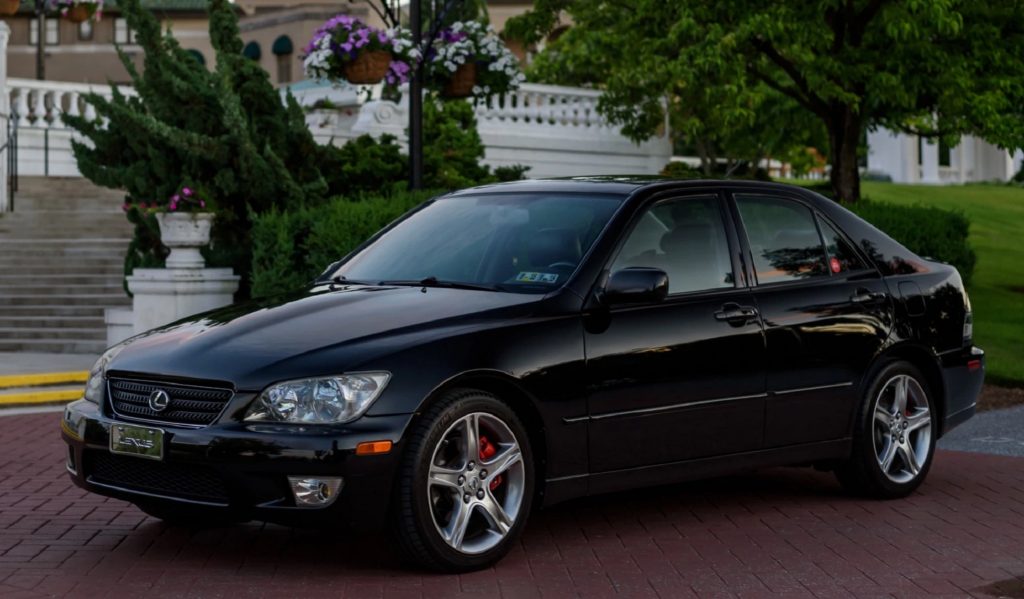
Originally, the Lexus IS was sold every bit the 1998 Toyota Altezza in Japan, Motor Trend reports. Information technology would brand its way over to the Us in 2001 in ii trims. The first, the IS200, has the same 2.0-liter four-cylinder engines as the Altezza. The 2001 Lexus IS300, though, has something a bit more strong.
RELATED: How Much Power Does the Updated 2021 Toyota Supra Really Make?
The Lexus IS300 comes with a iii.0-liter half dozen-cylinder engine known as the 2JZ-GE. MkIV Supra fans should be familiar with that engine code. Although it didn't have turbos and had a few internal changes, information technology was essentially the same engine constitute in the Toyota Supra. An engine which the JDM Altezza, incidentally, never offered.
Without turbos, the Lexus IS300 doesn't brand as much power every bit the Supra—simply 215 hp and 218 lb-ft. At to the lowest degree, that's the stock output. It's not unusual to see owners swap Supra turbos onto their Lexus IS300s. The 2JZ is iconic precisely because of how overbuilt it was, Jalopnik explains. This was the cease of the Bubble Era, which gave the world the Skyline GT-R and Autozam AZ-1. With the proper tuning, Jalopnik claims, owners could theoretically triple the IS300's output without upshot.
In addition to the 2JZ, the Lexus IS300 is also rear-bike bulldoze. And starting in 2002, a 5-speed manual and a wagon, the SportCross, became bachelor. Though the SportCross itself is automated-just.
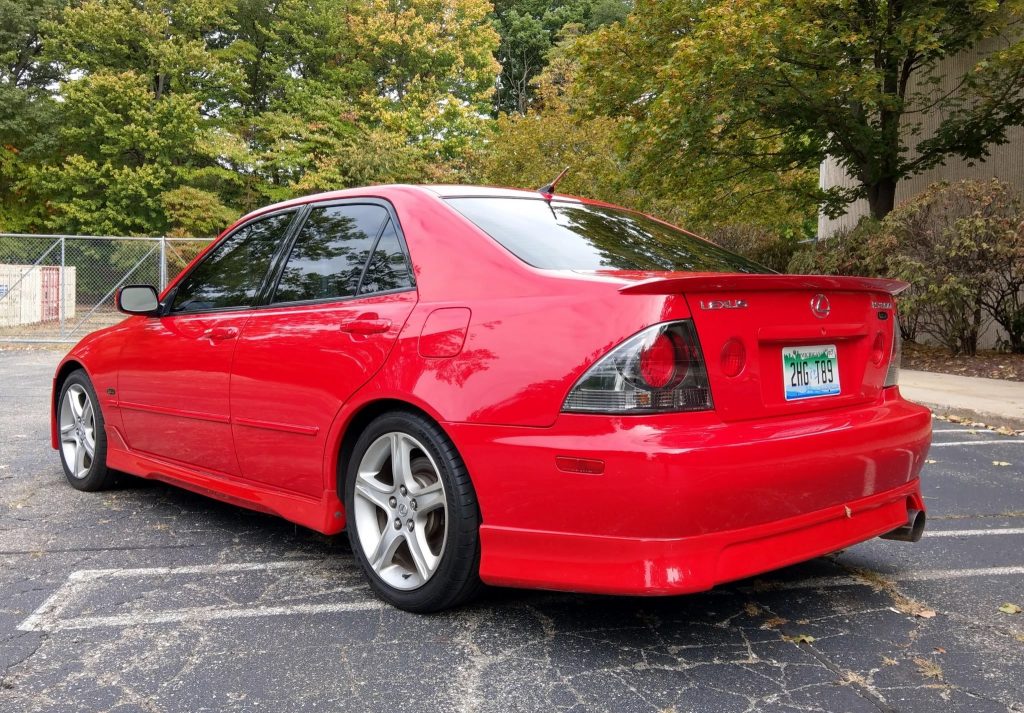
There were also the TRD-tuned Lexus IS300 L-Tuned models, MT reports. Phase I cars take a trunk kit, fog lamps, and a stainless-steel exhaust that added 8 hp. Stage Ii models add on new springs, larger anti-roll confined, cast-aluminum wheels, and Michelin Airplane pilot Sport tires. They likewise ride 1" lower. And a limited-slip rear differential was available as an option.
How does the Lexus IS300 drive?
In addition to receiving the MkIV Supra's engine, the Lexus IS300 was as well developed in function past its primary engineer, Nobuaki Katayama, Autotrader reports. Katayama besides adult the famed AE86 Corolla and helped pattern World Rally Championship and Le Mans race cars. As such, in terms of handling, the IS300 delivers.
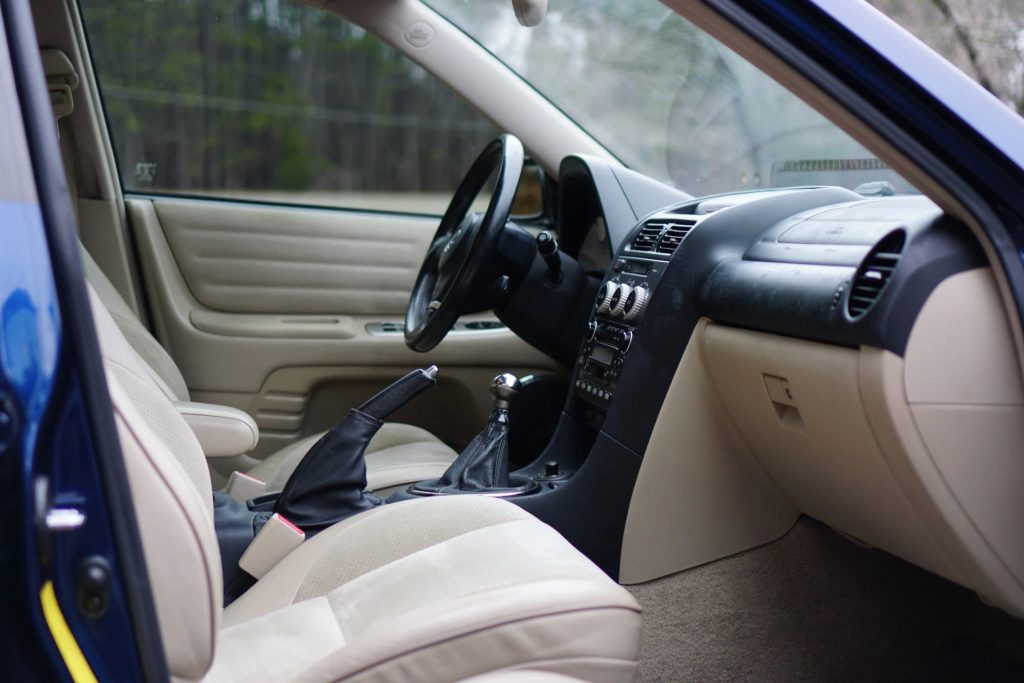
MT called its balance and steering experience "outstanding." The 5-speed manual's shift action is solid, and the clutch is piece of cake to live with. Plus, information technology'south still a Lexus. The leather seats are comfortable and supportive, Autotrader reports, and the plastics of good quality. You could also order the IS300 with navigation. The chronometer-fashion gauges can exist a bit difficult to read, but they're certainly unique.
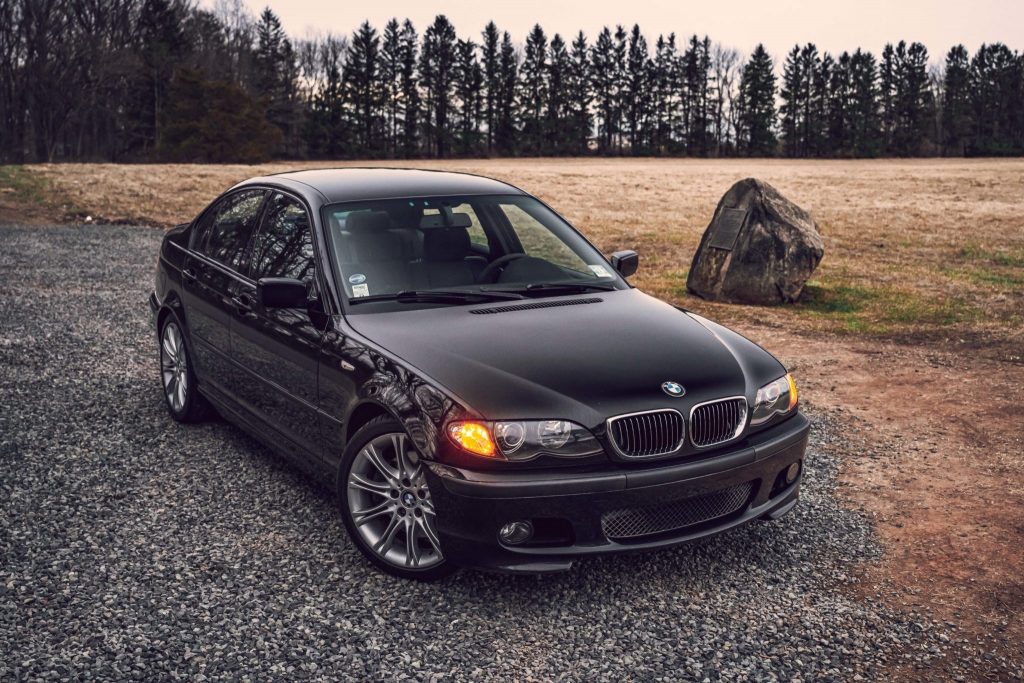
In terms of dispatch, the BMW 330i and 330i ZHP are faster to threescore. MT reports the manual Lexus IS300 can do 0-60 in about 6.6 seconds. The 330i, meanwhile, with its 225-hp 3.0-liter vi-cylinder, could do information technology in 6.1 seconds. The ZHP, with an actress 10 hp and a 6-speed manual, was even faster. But the IS300 was lighter than even the 185-hp 320i by 115 pounds.
Plus, even the adequately-reliable E46 three-Series can't match the IS300'due south reliability.
Pricing and common bug
RELATED: The 2007 Lexus IS 250 Has a Melting Dashboard Problem
The 2001-2005 Lexus IS300 isn't particularly problematic, CarComplaints reports. The only real outcome is the infamous melting dashboard that many other contemporary Lexus and Toyota models suffered.
The but bug MT suffered during its long-term test of a 2001 model came from damage acquired by inattentive driving. Though the 2002 and after models are recommended, due to a few surfaces getting more-durable cloth upgrades. As for the 2JZ, the only event is making certain the timing belts are changed at to the lowest degree every 100,000 miles.
Unfortunately, because of that 2JZ engine and the RWD drivetrain, many beginning-gen Lexus IS300s were modified over the years. As such, finding make clean stock ones can exist tricky. They've also held their value arguably improve than the E46. Decent-condition ones can go for nearly $16,000 on Bring a Trailer, though $eleven,000 is closer to the average cost. SportCross models, though, tend to get for $14,000-$16,000.
Follow more updates from MotorBiscuit on our Facebook page.
Source: https://www.motorbiscuit.com/the-original-lexus-is300-a-supra-engined-reliable-bmw/
0 Response to "2003 Lexus Is300 Motor Drawing Cooling"
Post a Comment